





Introduction
Have you noticed an increase in claim denials? Many small healthcare practices continue to face challenges with denied claims, resulting in delayed reimbursements, increased administrative effort, and added financial pressure. A significant number of these denials can be traced to preventable front-end issues, such as inaccurate or incomplete patient information collected during registration. By strengthening eligibility verification, patient data accuracy, and other front-end workflows, practices can reduce avoidable denials and improve overall revenue cycle performance.
When claim denials begin to accumulate, they can delay reimbursement and reduce revenue. Fortunately, many are preventable through accurate coding, eligibility verification, complete documentation, and adherence to payer policies.
This guide covers common CARC denial codes and explains how accompanying RARCs provide additional details during claim adjudication.
What You Need to Know About Denial Codes?
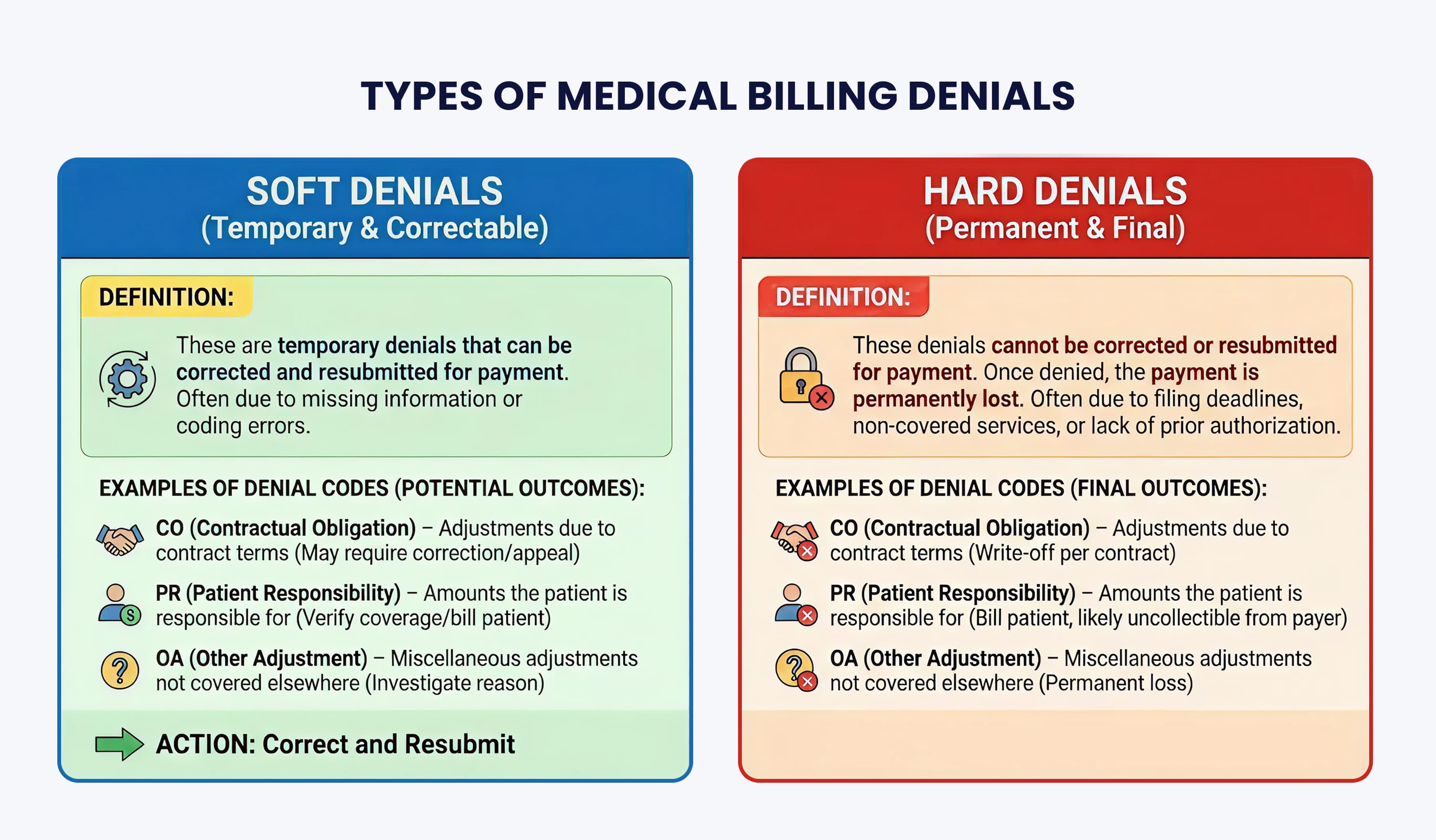
Denial codes? They’re the sneaky errors quietly eating away at your medical practice revenue. Simply put, denial codes act as translators for insurance denials; they explain exactly why a claim was rejected or paid less than expected.
Understanding these codes is essential for small practices. They help you identify the root cause of denials and give you the chance to fix errors and resubmit claims.
*Tip: *Always check the denial letter or Explanation of Benefits (EOB), which clearly states your appeal rights and deadlines.
These codes follow standardized CARC and RARC formats used by Medicare, Medicaid, and commercial payers.
Why Small Practices Struggle With Denial Codes?
Running a small practice means juggling multiple balls at once. Does it sound familiar to you? Sometimes you have to act as both the front desk and the back desk.
The problem starts when you hire someone or personally handle a task beyond your expertise.
For instance, as a provider, you know what is rendered, but you may not always know what is billable, covered, or compliant in the eyes of payers. And that’s precisely where denial codes start creeping in.
Stop Losing Revenue to Common Denial Codes
Top CARC Denial Codes Affecting Small Practices
Denial codes are often the real culprits behind delayed revenue, lost payments, and even compliance penalties.
In this section, we’ll break down the top 5 denial codes you must watch out for, and how avoiding them can save your practice time, money, and unnecessary headaches.
1. CO-16 – Missing or Incomplete Information
CO-16 denials happen when key information is missing or entered incorrectly on a claim, such as patient demographics, provider NPI, or required modifiers. Even minor informational errors can trigger denials, slowing payments and creating extra work for staff.
*Example: *A claim is submitted without the provider’s NPI. The payer denies it until the missing information is added. CO-16 falls under administrative/informational denials.
2. CO-50 – Non-Covered Services
CO-50 indicates that the billed service is not covered under the patient’s insurance plan. This type of denial is usually permanent and requires careful verification before services are rendered.
*Example:* *A patient receives a cosmetic dermatology procedure. When the claim is submitted, the insurer rejects it because elective cosmetic services aren’t covered. Often tied to payer medical policies, LCD/NCD coverage limits, or benefit exclusions*
3. PR-49 – Non-Covered Routine or Preventive Service
PR-49 appears when a payer denies a service because it is considered a non-covered routine or preventive examination, or because a diagnostic or screening procedure was performed in conjunction with a non-covered routine/preventive exam.
This denial ties back to correct CPT/HCPCS selection, ICD-10 diagnosis matching, and knowing each payer’s preventive coverage rules before the claim goes out. It is not an eligibility denial.
*Example: *A Medicare patient is billed CPT 99396 (comprehensive preventive visit, ages 40–64) with diagnosis Z00.00 (encounter for general adult medical exam without abnormal findings). Medicare denies the claim as PR-49 because routine physicals are non-covered the practice should have billed the Annual Wellness Visit (HCPCS G0438 for the initial AWV or G0439 for subsequent AWVs) instead.
Official source: X12 CARC 49 “This is a non-covered service because it is a routine/preventive exam or a diagnostic/screening procedure done in conjunction with a routine/preventive exam.” Confirmed via FCSO Medicare.
4. CO-22 – Payment Adjusted Due to Contractual Obligation
The CO-22 denial code occurs when a claim is rejected because another insurance payer has been identified as primary, and the claim was not submitted to them first.
*Example: *A patient has Blue Cross (primary) and Aetna (secondary). The clinic submits the claim to Aetna first, and it’s denied with CO-22 until Blue Cross processes it. This reflects Coordination of Benefits (COB) errors.
5. CO-11– An Error In Coding
CO-11 denial code occurs when the diagnosis code submitted in the claim doesn’t match the rendered healthcare procedure.
*Example: *A patient with acute sinusitis is coded as J00 (common cold) instead of J01.90. The claim is denied until corrected.
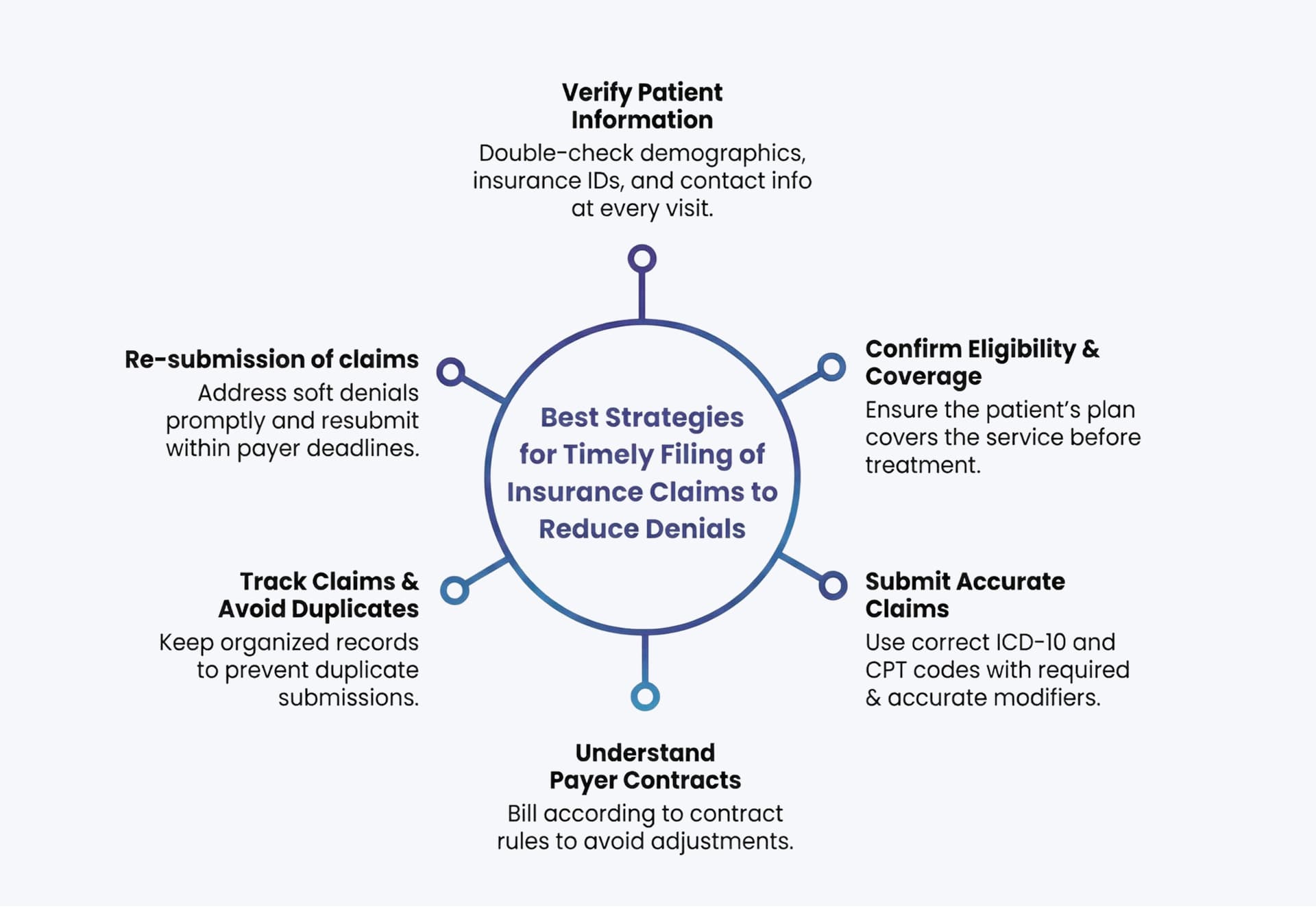
Tips to Beat the Clock: Proven Ways to Prevent Claim Denials
Whether you run a small practice or a large healthcare facility, denials don’t have to be your headache. The trick is simple: keep a close eye on your denial trends and stay one step ahead of the payers.
Here’s the reality: Many small practices rely on just one biller to handle almost everything: scheduling appointments, managing the front desk, etc. It’s simply too much for one person to handle perfectly. With that many tasks, mistakes are bound to happen, and payers are well aware of them.
By implementing the right strategies, you can reduce errors, speed up reimbursements, and maintain healthy cash flow. Here’s how:
Thinking About Outsourcing Your Medical Billing?
*Get paid instantly with Dastify Solutions Denial Management Services.* |
|---|
Struggling With CO-16 or PR-49 Errors?
Wrapping It Up
Claim denials may look small on paper, but they create significant setbacks, slower payments, extra admin work, and unnecessary revenue loss. The top denial codes we covered can hit any practice, but the good news is they’re highly preventable when you have the right team behind you.
Why does outsourcing to a medical billing company make all the difference?
Fewer Errors: Experts catch coding, documentation, and eligibility issues before submission.
Faster Payments: Clean claims mean quicker approvals and steady cash flow.
Proactive Denial Management: Every denial is tracked, appealed, and fixed; no lost revenue.
Full RCM Support: From coding to collections, your entire billing cycle stays optimized.
With a professional medical billing company handling the complexities, your practice can finally breathe more time for patients, less stress over revenue, and zero fear of avoidable denials.