

Running a small medical practice but still missing out on profits? Here’s the truth: you’re trying to wear every hat at once, something your competitors stopped doing a long time ago.
The answer? They stopped handling everything themselves and switched to outsourced medical billing. It’s the fastest way to boost profits, reduce stress, and get the highest revenue gains.
| Dastify Solutions boosts collections by 20–30% compared to in-house billing teams. So the real question isn’t if you should outsource; it’s when. |
The 5 Hidden Revenue Killers for Small Practices
When you’re performing a role as a doctor, manager, and biller, all in one, something’s bound to slip through your hands. Spoiler alert: it’s usually the revenue.
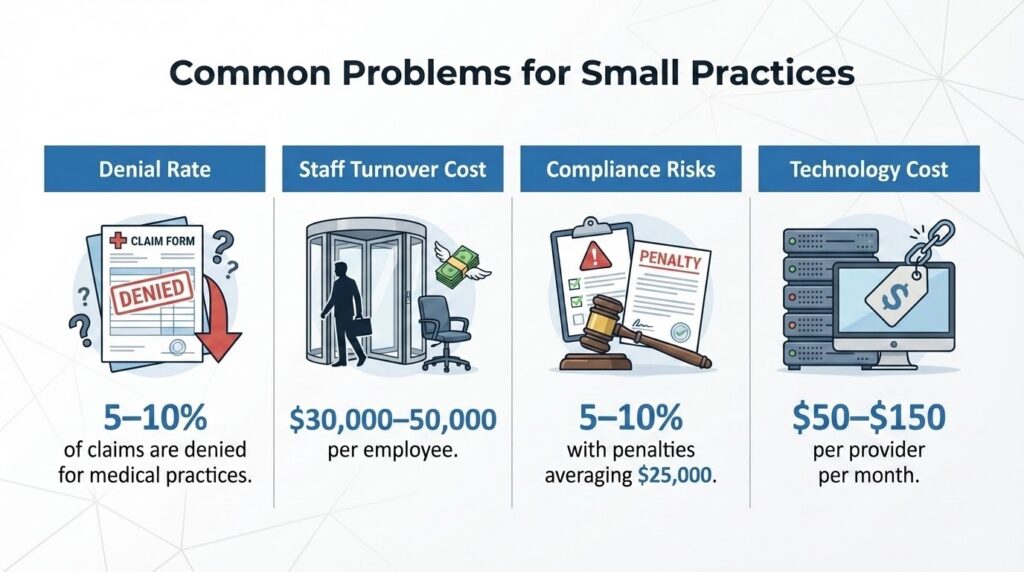
1. Administrative Overload & Staff Turnover
Many small practices rely on a single biller or split billing tasks among the front desk due to tight budgets. But this “do more with less” approach eventually cracks.
Most practices end up dealing with staff burnout, coding mistakes, billing errors, late submissions, and everything in between. And every one of these delays slows down reimbursements, taking a direct swing at the bottom line.
But the complexity doesn’t stop there. In today’s competitive labor market, high staff turnover adds fuel to the fire. Every time someone leaves, your practice doesn’t just lose a team member; it loses revenue, time, and momentum.
2. Costly Denials
Small practices often work with inexperienced teams, which leads to errors in claims. Payers usually deny claims due to documentation gaps, incorrect modifiers, and incorrect CPT/ICD-10 coding.
A single denied claim doesn’t simply sit there… It multiplies your workload.
For a small practice already running on a limited staff, every denial is like adding another heavy brick to an already overloaded cart.
3. Declining and Complex Reimbursement
Declining and complex reimbursements are the biggest curveballs small healthcare practices deal with. Payer rules change overnight, reimbursement rates keep shrinking, and documentation demands grow heavier by the day.
It’s a constant “do more, get paid less” cycle for small practices billing. Moreover, they receive a lower reimbursement rate than extensive facilities, which eats away at profits.
4. Costly Penalties & Compliance Risks
In healthcare, compliance isn’t optional; it’s the backbone of your practice. HIPAA, CMS guidelines, payer rules… they all demand 100% accuracy. But without a dedicated, knowledgeable billing team, you’re essentially walking a tightrope without a safety net.
For a small practice, these mistakes can lead to painful penalties, severe financial strain, and, in worst cases, jeopardize your ability to operate.
5. Lack of Advanced Billing Technology
Enterprise-level billing software is expensive. Small clinics often rely on basic systems or outdated manual processes that don’t scrub claims or catch errors, resulting in higher rejection rates, no real-time eligibility checks, and revenue leaks that go unnoticed.

Why are Small Practices Shifting to Medical Billing Outsourcing?
Today, small medical practices are facing a rapidly evolving healthcare landscape.
With ever-increasing administrative burdens, staffing challenges, and the pressure to optimize revenue, many are turning to medical billing outsourcing as a strategic solution.
Outsourced billing doesn’t just “take tasks off your plate.”It transforms the entire revenue cycle by replacing guesswork with expertise.
Here’s how outsourcing medical billing delivers gains:
1. Lower Denial Rates
Certified coders + automated scrubbing tools reduce errors before claims go out the door.
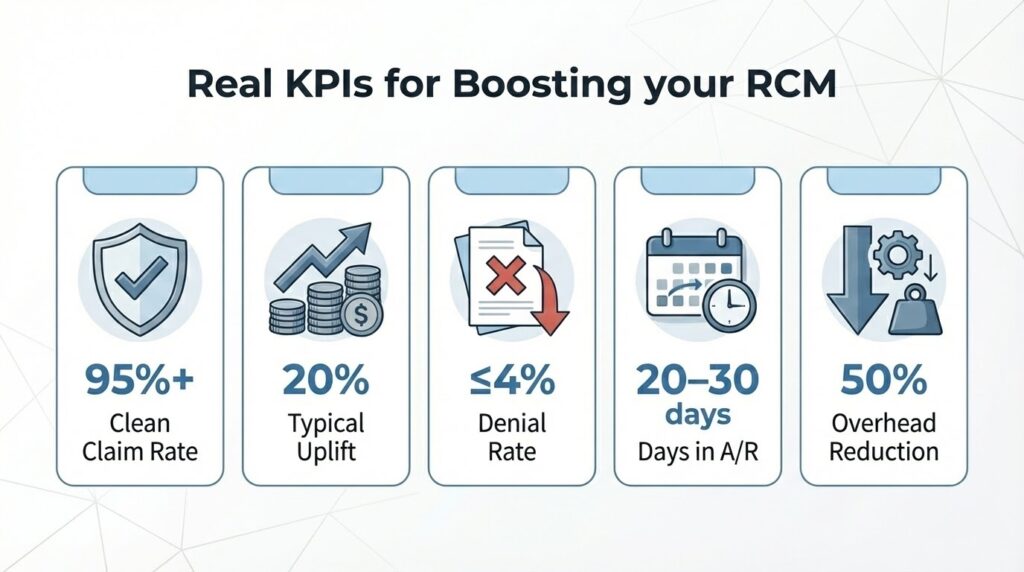
Dastify Solutions typically reduces denial rates to ≤4% with professional denial management services.
2. Faster Payments
Daily claim submission and aggressive follow-up mean fewer delays.
Most practices see A/R days drop from 45–60 to 30–35.
3. Higher Net Collections
Because fewer claims are lost, underpaid, or abandoned, net collections rise, often by 10–30%, depending on the baseline.
4. Lower Staffing & Operational Costs
Hiring, training, and retaining billers is expensive. Outsourcing replaces unpredictable HR costs with a fixed service fee.
5. 100% Focus on Patient Care
Doctors and staff reclaim hours every week that were previously spent on paperwork.
The Result?
Small practices function like larger, revenue-efficient healthcare organizations, without having to build internal billing teams.
Proven Strategies to Cut Rejections and Accelerate Reimbursements for SMEs
- Revenue Cycle Management Services
- Claim Submission Services
- Denial & AR Management Services
- Eligibility Verification Services
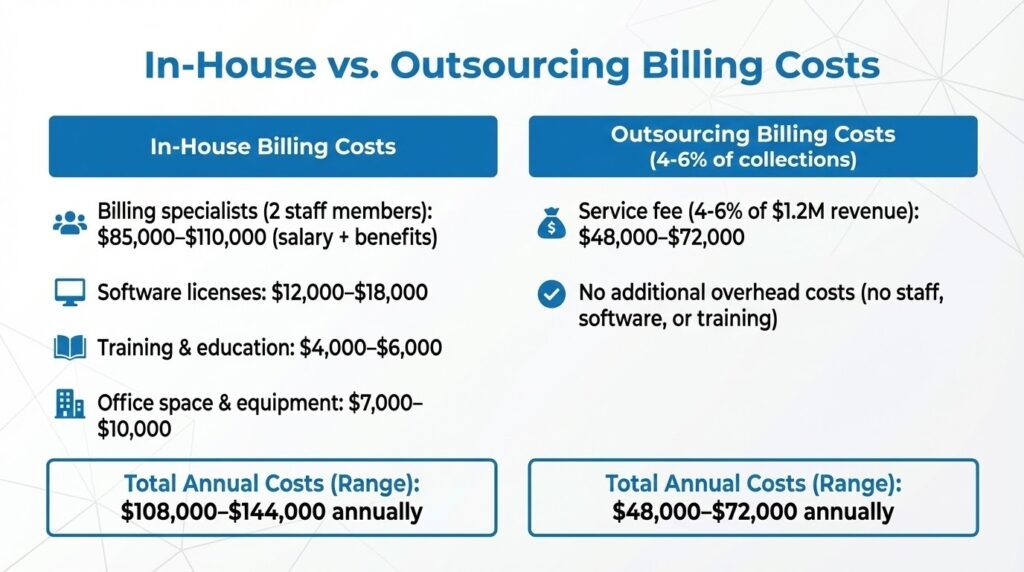
Real ROI Calculator: How Much Can a Small Medical Practice Save?
Background:
A small medical practice with two providers generating $1.2 million in annual revenue was grappling with the high costs of in-house billing. After evaluating its operational expenses, the practice decided to outsource its billing functions to assess potential savings.