


Introduction
Healthcare data breaches cost millions of dollars per incident, and medical billing companies handle some of the most sensitive data in healthcare, including ePHI, insurance details, claims files, and payment records. As billing operations become increasingly digital and remote, AES-256 encryption helps protect sensitive billing data at rest and in transit, supports HIPAA Security Rule safeguards, and can reduce the impact of unauthorized access or ransomware events. But what exactly is AES-256 encryption, and how does it protect billing workflows?
What Is AES-256 Encryption?
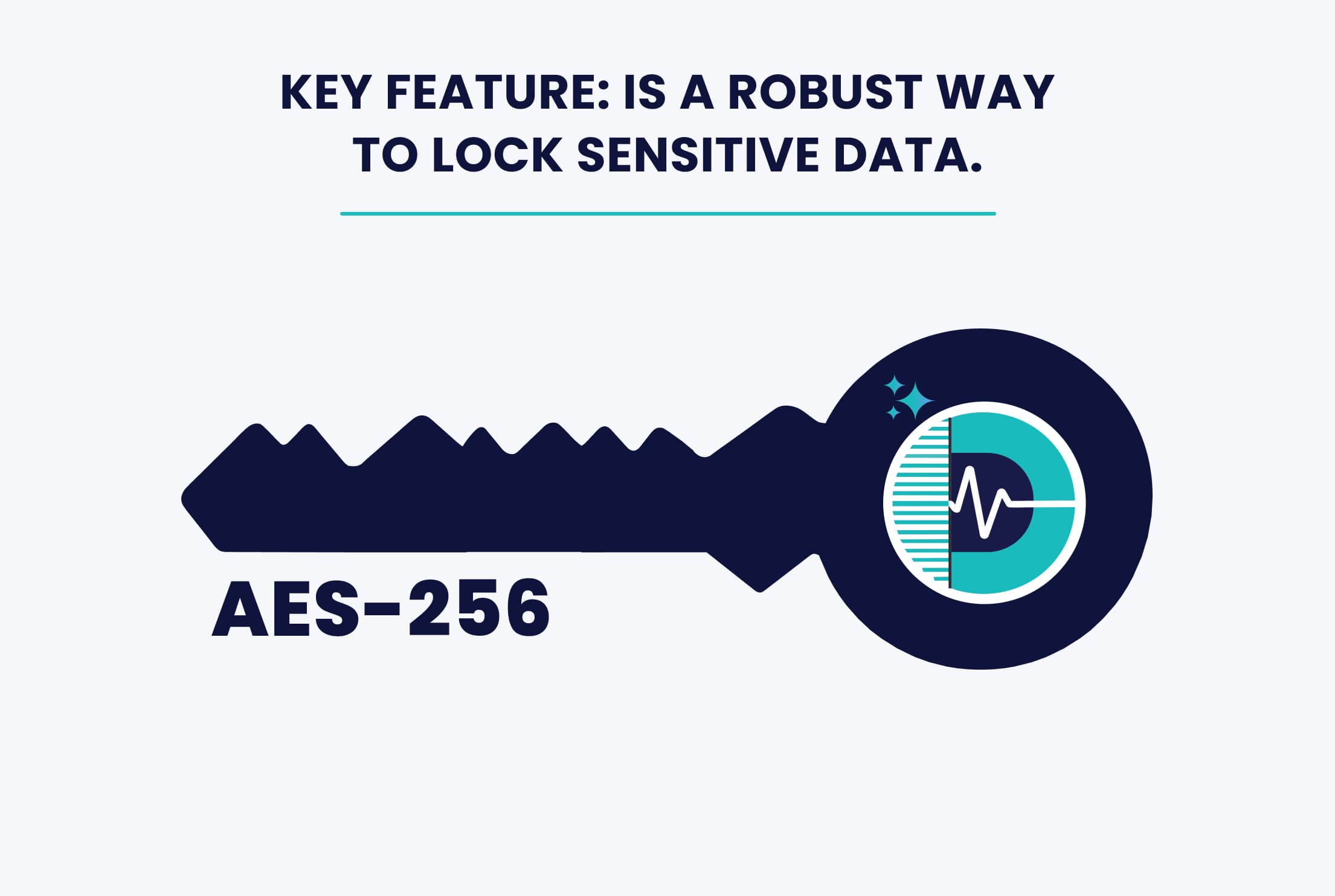
AES, or Advanced Encryption Standard, is a NIST-approved federal encryption standard used to protect electronic data. The AES standard supports 128-bit, 192-bit, and 256-bit cryptographic keys, and each AES version encrypts data in 128-bit blocks. AES-256 refers to AES using a 256-bit key.
Why AES-256 Is Widely Used for Sensitive Data?
AES-256 uses a 256-bit cryptographic key, which provides a very high level of protection against brute-force attacks when implemented correctly. It is commonly used in industries that handle sensitive information, including healthcare, finance, and government. AES converts readable plaintext into unreadable ciphertext, and the data can only be restored when the correct key and authorized decryption process are used.
How Does AES-256 Encryption Work in Billing?
AES-256 is a symmetric encryption algorithm, meaning the same key is used to encrypt and decrypt data. Here’s how it works in practice:
- Symmetric Block Cipher Operations: AES processes data in 128-bit blocks. AES-256 uses a 256-bit key and 14 transformation rounds to convert plaintext into ciphertext.
- Encrypted Before Storage & Transmission: All sensitive data becomes unreadable to unauthorized users, whether at rest in databases or in motion across networks.
- Controlled Decryption: Only authenticated systems or users with the encryption key can decrypt the data, ensuring strict access control and accountability.
In billing workflows, AES-256 protects data:
- At rest (stored in databases or servers)
- In transit (during file transfers, remote access, or system integrations)
- During authorized platform use, when combined with access controls, audit logs, MFA, and secure application workflows
AES-256 protects the data itself, but encryption should not work alone. In medical billing environments, it should be paired with MFA, role-based access, audit logging, secure key management, and zero-trust access principles to reduce unauthorized access risk. Source
Challenges AES-256 Solves for Billing Companies
1. HIPAA Compliance Risks
HIPAA requires regulated entities to implement administrative, physical, and technical safeguards to protect ePHI. AES-256 can support the HIPAA Security Rule by helping protect the confidentiality of stored or transmitted ePHI when it is implemented with appropriate access controls, key management, authentication, and audit safeguards.
2. Data Breaches and Cyber Threats
Properly encrypted data may remain unreadable to unauthorized users if the encryption keys are protected and access controls are not compromised. This can reduce the impact of a breach and support breach-risk analysis, but encryption does not remove the need for monitoring, MFA, backups, and incident response.
3. Secure Remote and Hybrid Billing Teams
As billing companies adopt remote or virtual staffing models, AES-256 ensures data security regardless of where authorized users work.
4. Provider Trust and Vendor Due Diligence
Providers increasingly evaluate billing vendors on security standards. Documented encryption controls can strengthen vendor credibility during audits, RFPs, business associate reviews, and security questionnaires.
How AES-256 Secures Billing Operations
Medical billing companies apply AES-256 encryption across multiple operational touchpoints, including:
- Patient demographic and insurance information
- EHR and practice management system access
- Claims data (837/835 files)
- Accounts receivable and payment records
- Secure file sharing between providers and billing teams
- Cloud-based billing platforms and backups
- Remote access for billing staff and RCM Virtual Assistants
This ensures that sensitive healthcare data remains protected throughout the entire revenue cycle.
Data Breaches & Ransomware Attacks: Why Billing Operations Are a Prime Target
Billing platforms are attractive targets because they may contain ePHI, insurance details, demographic data, claim histories, payment information, and provider records. This combination can be valuable to attackers involved in identity theft, insurance fraud, phishing, and ransomware.
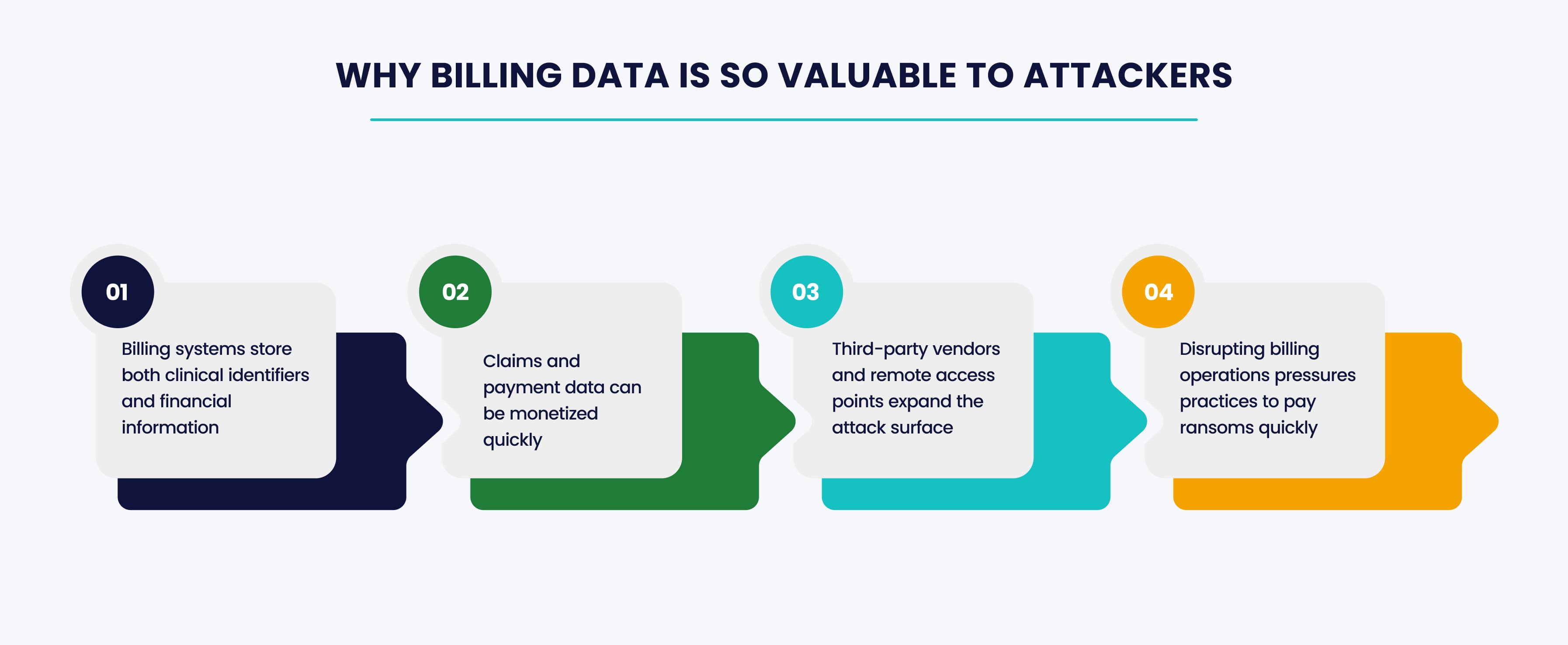
As a result, billing companies and their provider partners are increasingly targeted through ransomware, phishing, credential theft, and vendor-based attacks.
How AES-256 Reduces the Impact of Breaches and Ransomware
While no system can eliminate cyber risk entirely, AES-256 encryption significantly limits the damage:
- Properly encrypted data may be unreadable to unauthorized users if encryption keys are not compromised
- Encryption can reduce the usefulness of stolen files when implemented correctly
- Encryption may support HIPAA breach-risk analysis when PHI is rendered unreadable, unusable, or indecipherable
- Strong encryption can reduce legal, financial, and reputational risk, but it does not eliminate breach obligations
- Encrypted, tested backups can support recovery when combined with incident response planning
In ransomware scenarios, encrypted and regularly tested backups can support recovery, but business continuity also depends on backup isolation, access controls, incident response planning, and restore testing.
Why Providers Should Choose Billing Companies with AES-256 Encryption
In 2026, providers are paying closer attention to billing vendors’ security controls, including encryption, MFA, access management, audit logging, and backup practices. AES-256 is one important control, but it should be part of a broader security program.
Providers prefer billing companies that implement AES-256 encryption because it directly addresses their operational, compliance, and liability concerns.
Key Reasons Providers Choose AES-256-Enabled Billing Companies:
- Enhanced Data Protection: Providers know their patients’ sensitive information is secure against breaches and unauthorized access.
- HIPAA Safeguard Support: AES-256 can help protect ePHI when combined with required HIPAA administrative, physical, and technical safeguards.
- Reduced Liability: Providers minimize exposure in the event of cyber threats, giving peace of mind.
- Audit-Ready Security: Encrypted systems make vendor audits and RFP reviews simpler and more transparent.
- Support for Remote Workflows: Providers trust that remote or hybrid billing teams, like those at Dastify Solutions, can work securely without compromising sensitive data.
- More Reliable Billing Operations: Secure systems help protect claim files, payment records, and provider data so billing work can continue with lower data-security risk.
- Competitive Advantage: Partnering with a billing company that prioritizes security signals professionalism and reliability.
Before vs After AES-256 Encryption
Before Strong Encryption Controls | After AES-256 with Supporting Controls |
|---|---|
Sensitive billing data may be readable if accessed without authorization | Stored and transmitted data is encrypted |
Higher impact if files are stolen or exposed | Exposed files may be unreadable if keys are protected |
Manual or inconsistent file-sharing controls | Secure file exchange with encryption and access controls |
Weak audit readiness | Better support for security reviews, RFPs, and vendor questionnaires |
Lower provider confidence in vendor security | Stronger trust when encryption is paired with MFA, logging, and key management |
Security controls may include AES-256 encryption, HIPAA-focused safeguards, access controls, and MFA.
Frequently Asked Questions
Is AES-256 encryption required for HIPAA compliance?
HIPAA does not name AES-256 as a required encryption standard. Under the HIPAA Security Rule, encryption is treated as an implementation specification that must be evaluated through risk analysis and implemented when reasonable and appropriate, or replaced with an equivalent alternative measure. AES-256 is commonly used because it aligns with NIST-approved encryption standards.
Is AES-256 quantum resistant?
AES-256 is considered stronger against generic quantum speedups than shorter symmetric keys, but it is not the same thing as NIST post-quantum public-key cryptography. For healthcare vendors, AES-256 can remain part of a strong data-protection strategy while organizations also monitor NIST post-quantum standards for key exchange, signatures, and other public-key uses.
Does AES-256 protect data during transmission?
Yes, AES-256 can protect data at rest and can be used within secure transmission protocols. For data in transit, protection also depends on proper protocol configuration, certificate management, authentication, and secure file-transfer or application workflows.
Why is encryption important for billing companies?
Billing companies handle ePHI and financial information, making encryption critical to prevent breaches and maintain compliance.
Conclusion
AES-256 encryption is a critical safeguard for medical billing and RCM operations because it helps protect ePHI, claims files, insurance details, payment records, and provider data. When paired with MFA, role-based access, secure key management, audit logging, tested backups, and documented security policies, AES-256 can support HIPAA Security Rule safeguards and reduce the impact of unauthorized access.
For healthcare providers, this means stronger data protection, better vendor-security confidence, and a more resilient billing operation in a high-risk healthcare cybersecurity environment.