

AAPC/CPC-Certified Coders
Mental Health Denial Management Services
A 15% denial rate isn’t just an administrative burden; it’s a clinical threat. Dastify Solutions recovers your revenue using a 2026-compliant appeal framework that stops denials from recurring. Our approach to your mental health claim is: denied once? Never a second time.
AAPC/CBHC/CPC-Certified CodersMHPEA/CMS ComplianceTime-Based Psychotherapy & ICD CodingFollow ASAM CriteriaState & Federal Behavioral Health Compliance
2026 MHPAEA Compliant
ASAM Criteria Aligned
Why Dastify's Mental Health Appeal Services are Unbeatable
Most billing companies write off denied claims and move on. Dastify Solutions doesn’t. We recover even small-dollar and high-value claims from therapy sessions, psychiatric evaluations, and group counseling because when they pile up, they quietly turn into major revenue loss.
How we achieve clean claims:
Clinical Documentation Improvement (CDI)
ERISA Appeals (Fully Insured & Self-Funded Plans)
Peer-to-Peer (P2P) Review
Qualitative Treatment Limits (QTL) Defense
Concurrent Denial Management
Secondary & Coordination of Benefits (COB) Appeals

Here's How We Fix Your Denials From Recurring
Our mental health claims specialists have mastered CMS behavioral health coverage rules and ensure your claims comply with regulatory requirements and compliance standards. Moreover, our AI tools watch silent payer policy changes from Optum, Beacon, and Magellan, adjusting your claims before new denial trends hit your revenue.
30/60/90-Day Denial Trend Analysis
AI denial prediction dashboards
Automated code scrubbing for mental health claims
Automate Eligibility Verification
Payer-Specific Rule Mapping
Authorization & Visit-Limit Tracking
Concurrent Coding & Real-Time Claim Validation
Telehealth Compliance Validation (POS & Modifiers)
Clean-Claim First-Pass Acceptance Monitoring
Managing the Behavioral Health Denial Crisis
Mental health claims face higher denial rates than medical-surgical claims. The sad part is that it’s not because the care provided isn’t right, but because payers apply rigid medical-necessity standards to complex behavioral health treatment.
| Reason | Our Solution |
|---|---|
| The Medical Necessity Trap Insurers sometimes deny ongoing therapy because they think the patient has improved, even when treatment is still necessary. | We challenge every denial with clinical precision, ensuring claims meet medical necessity criteria and are approved. |
| Level-of-Care (LOC) Gaps Claims get denied when the paperwork doesn’t clearly show why outpatient, IOP, or PHP services are still needed. | Our experts ensure every claim is at the correct level of care, supported by thorough documentation to prevent denials. |
| Generic Clinical Notes Templated or repetitive documentation weakens medical-necessity arguments. | We improve clinical documentation with detailed, individualized narratives that get your mental health claims approved. |
Medical Necessity Defense for High‑Risk Claims
We align your documentation with the latest 2026 standards for substance use disorder (SUD) and behavioral health care, helping prevent denials and recover high-risk claims efficiently.
| Denial Scenario | 2026 Recovery Strategy |
|---|---|
| 90837 "Time" Audit | We submit session-specific start/stop logs + clinical intervention summaries. |
| Experimental/Investigational | We cite the 2026 Clinical Practice Guidelines to prove the standard of care. |
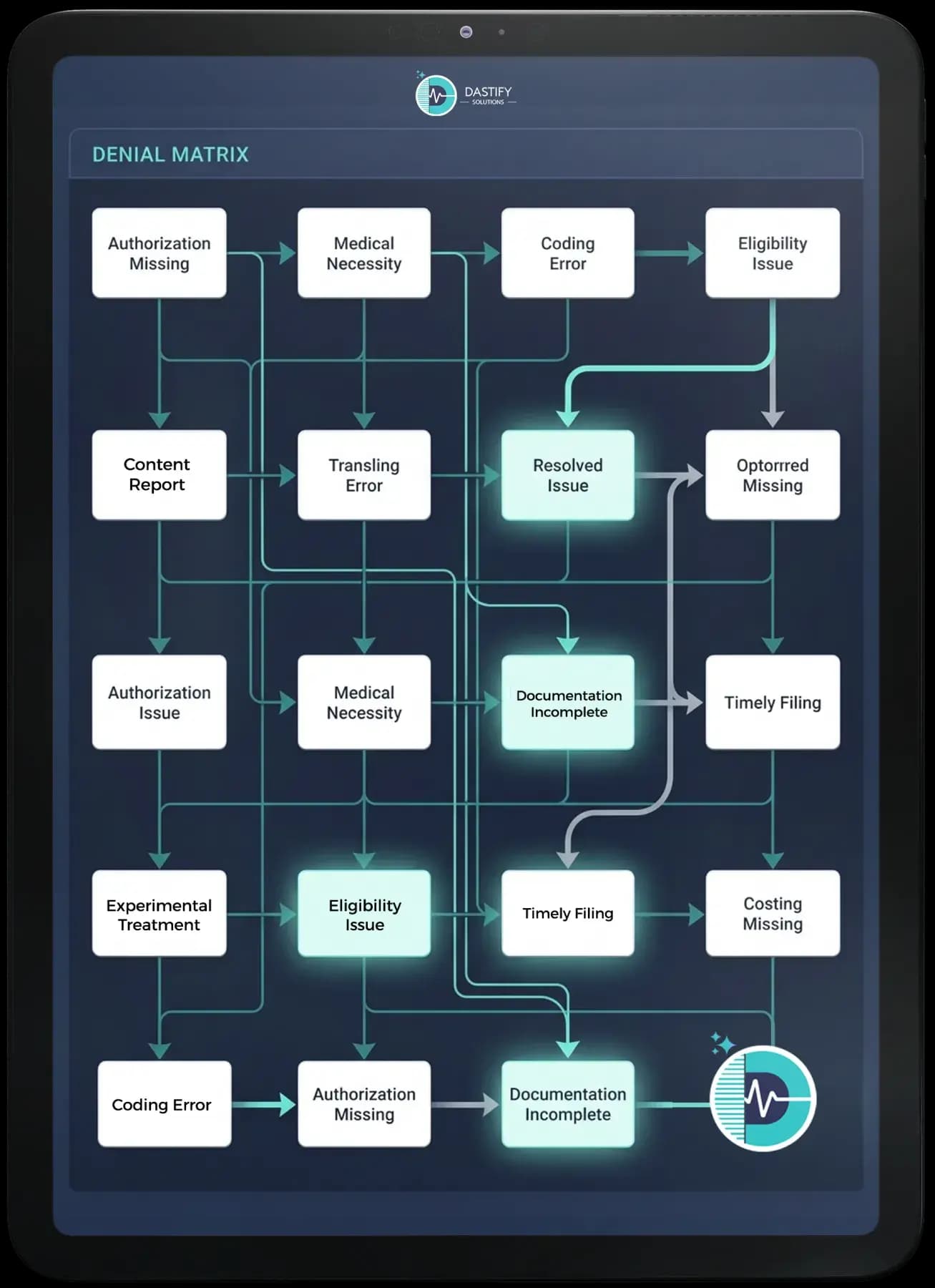
Common Mental Health Denial Categories (The Matrix)
Mental health claims are frequently denied for reasons unrelated to the quality of care. Here are the key categories we address:
Authorization Not on File
Denials occur when a clinician's session isn't properly linked to the payer's authorization.
Medical Necessity (90837 Audit)
Payers often downcode 60-minute sessions to 45 minutes; we ensure documentation supports the full session.
Non-Covered Modalities
Treatments like TMS or Spravato may be denied as "experimental"; we prepare appeals with evidence-based support.
Credentialing / Modifier Mismatches
Incorrect use of modifiers (95/GT for telehealth, HO/HN/HM for licensure) triggers denials; we verify accuracy before submission.
Our Proprietary Appeal Strategy
Mental health claims are frequently denied for reasons unrelated to the quality of care. Here are the key categories we address:
Level 1
Appeals
Correct technical errors and resubmit claims within 30–60 days to recover denials quickly.
Level 2
Clinical Appeals
Draft Letters of Medical Necessity (LOMN) supported by standardized clinical tools such as PHQ-9, GAD-7, or CASII to defend therapy, evaluations, and treatment sessions.
External
External / Independent Reviews
Escalate persistent denials to state insurance commissioners or independent review organizations (IROs) to ensure fair resolution.
NQTL
NQTL Parity Defense
We fight unfair denials of your 90837 sessions, using the 2026 Federal Parity rules to ensure your patients' care is billed fairly.
Hard Vs Soft Mental Health Denials
| Denial Type | Common Cause | How We Fix It | Recovery Time |
|---|---|---|---|
| Soft Denials | Missing or expired authorizations, minor coding errors, incorrect modifiers, and incomplete documentation | Review the claim, correct errors, and resubmit promptly | 7-14 Days |
| Hard Denials | Medical necessity disputes (e.g., 90837 audits), non-covered treatments (TMS, Spravato), and LOC gaps | Prepare detailed clinical documentation, draft Letters of Medical Necessity, escalate to IROs or state insurance commissioners, and recover G2211 add-ons by preventing inappropriate bundling or downcoding. | 30-60 Days |
Don't Let Mental Health Denials Slow Your Practice
We review, challenge, and recover every lost claim. Schedule your free denial audit today.